Working Groups At The AI Impact Summit / Human Capital
Human Capital Working Group
Advancing equitable skilling and inclusive workforce transitions for an AI-enabled future of work.

About The Working Group
AI is changing the nature of work at an unprecedented pace, creating new opportunities while also disrupting traditional livelihoods. However, realising the full promise of AI requires proactive skilling, adaptive institutions, and forward-looking policies to ensure that its benefits are shared equitably across all regions and income groups. The Human Capital thematic working group will work towards developing an equitable AI reskilling ecosystem that supports inclusive workforce transitions.
Vision & Objectives
Building an equitable global AI ecosystem
The discussions in the Human Capital working group will explore pathways to equip individuals, irrespective of geography, gender, or socio-economic background, with the skills required to participate meaningfully in the evolving AI economy.
Leadership
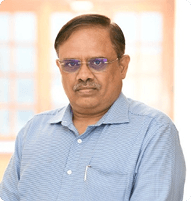
Prof. TG Sitharam
India Co-Chair
Chairman, All India Council of Technical Education (AICTE), Govt of India
Prof. (Dr.) T G Sitharam took over as Chairman, All India Council of Technical Education (AICTE), Govt of India on December 21, 2022. He is a visionary academic leader with 35+ years of shaping technical education, skilling, research, and innovation. He is the architect of scalable, tech-integrated models, and has spearheaded NEP 2020 reforms, industry partnerships, and national projects. He has established Centers of Excellence in AI, drones, cybersecurity, and emerging technologies, transforming institutions and impacting millions through grassroots and digital initiatives. With over four decades of pioneering contributions in civil and geotechnical engineering, infrastructure development, and technical education policy, Prof. T. G. Sitharam blends scientific depth with nation-building foresight. He is ranked among the top 2% of scientists globally (Stanford) and is recognized as a rare leader who bridges academia, government, and community innovation.

Philippines
Country Co-Chair

Rwanda
Country Co-Chair
Key Issues
Understanding the global AI divide and our approach to bridging it
The Challenge
Automation, intelligent systems, and data-driven processes are increasingly taking over routine and repetitive tasks, reshaping traditional job structures and skill requirements. While these developments can drive efficiency and innovation, they also risk displacing segments of the workforce, particularly in labour-intensive and intermediary roles, potentially widening existing socio-economic divides if not managed carefully.
The Solution
At the same time, many countries, especially in the Global South, face capacity and resource gaps that constrain their ability to prepare workers for the AI-enabled economy. This presents an opportunity for the international community to collaborate on meaningful reskilling initiatives that build workforce readiness for the digital and AI driven future.
The Impact
Ensuring a just and inclusive transition requires prioritising reskilling and upskilling initiatives that equip individuals affected by automation with the capabilities needed to adapt to new and emerging roles.
Meeting Schedule
5th-6th January 2026
Hybrid Meeting (Guwahati)

Help shape the future of global AI by sharing your perspectives, suggestions, and expertise. Your input will contribute to equitable access and inclusive AI innovation worldwide.
Share your input
We value your insights and contributions to the working groups
Related Pre-Summit Events
Join related events building momentum for the summit